Giannis Antetokounmpo Just Offered Sports Content Creators Everywhere a Valuable Lesson
Feb 10, 2026
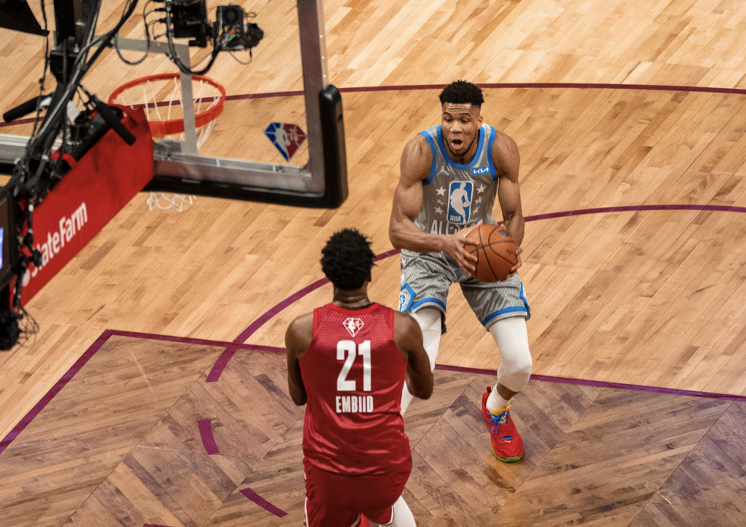
Giannis Antetokounmpo of the Milwaukee Bucks has enraptured NBA and sports fans at large for years with his unique on-court exploits. More recently, he has captured their attention with trade speculation. And even more recently than that, he announced a brand partnership that is inciting thinkpieces and a divisive mix of responses.
Shortly after the NBA’s trade deadline came to pass, the two-time MVP announced not just a partnership, but a shareholder agreement with Kalshi, a prediction market provider. People were…not happy. And rest assured, while Giannis is free to invest and make money as he pleases (for the most part), he absolutely made a mistake here from which all people working in sports can learn. It doesn’t matter whether you’re a legacy media member, blogger, podcast host, YouTube content creator, etc.
For those who aren’t familiar with prediction markets, they let customers place money on yes-or-no events. One such example would be: Will Giannis play for the Bucks next season? This sounds eerily familiar to the more widely used and accepted sports betting format that most of the United States allows. And that’s because it is eerily similar.
Yet, prediction markets operate in a gray area. Basically, they claim that the way their odds on “event-based contracts” are determined means these transactions are not conventional forms of gambling. They are instead derivatives, not unlike the stock market, and subject to federal regulation—which, it just so happens, is looser and more opaque than the state oversight to which licensed sportsbooks are beholden.
The rising popularity of prediction markets has created quite a stir directly within the industry. Following Giannis’ Kalshi announcement, though, it was the fans and general sports media that thrust a spotlight on prediction markets. And make no mistake, virtually no one was happy with Giannis.
Giannis’ Stakeholder Agreement with Kalshi Thrusts Integrity of Sports into the Limelight
Under the NBA’s current collective bargaining agreement, players are permitted to have partnerships and ownership stakes in sports betting companies. The document has decided to treat prediction markets in the same vein. So, to be clear, Giannis isn’t violating any official rule.
Still, while people accept that pro athletes will be endorsed by and invest in sports betting companies, the act of sports betting itself, while also hotly debated, doesn’t draw nearly as much scrutiny. If we are being totally honest, that’s perfectly fair.
Legal sports betting is more heavily regulated. States and leagues have processes in place to detect any aberrations and violations. That’s how so many scandals come to light. They are regrettable, without question. But they are also proof that the regulations are, to some extent, working.
Prediction markets do not have the same regulations governing their activity. So while Kalshi has said that Giannis will be “forbidden” from “trading” on NBA markets, we are essentially forced to take their word for it.
This type of pinkie promise doesn’t sit well with everyone. And frankly, it shouldn’t.
The Giannis-Kalshi Relationship Incites a Larger Discussion
Just so we’re clear: This isn’t necessarily about Giannis specifically. We are not claiming he will attempt to manipulate odds on his offseason trade destinations for personal gain. This is instead about protecting the integrity of unscripted live sports.
By announcing his partnership with Kalshi like he did (“We’re all on Kalshi now,” he posted), at the time he did (just after they accepted trades on his future), it advances the idea that the results of sporting events, be it individual or team-based, must be brought into question. How can we trust that athletes, entities or bad actors won’t find a way to game the lack of oversight in prediction markets? We can’t. We shouldn’t. It is our job to question things.
Heck, people continue to do it with sports betting. Like we said, though, the concrete oversight to which the industry is subject has helped matters a great deal. Had Giannis announced a partnership with a well-known sportsbook, people hardly would have batted an eye.
This, in turn, is a lesson for us all. The presentation and context of what you’re doing matters a great deal. Whether you’re a famous athlete like Giannis or a YouTuber just beginning to flesh out content on your channel, the way you present yourself, sponsorships and partnerships included, is going to be scrutinized.
Let us say, for instance, Giannis wanted to go ahead with this Kalshi deal. He could have presented it differently, as a business opportunity rather than, per his announcement, a chance to convey his opinions. Beyond that, he could have and should have most certainly timed the news differently. Firing that off just after “contracts” on whether he would be traded paid out (note: he wasn’t traded) is the mother of all poor public-relations decisions.
Authenticity is everything these days. The audience wants to feel like they have more than a para-social relationship with content creators. And you better believe sports fans want to feel as if what they’re watching is beyond being tainted in any way.
Even if only for a minute, Giannis undermined the latter. Whether the NBA or himself comes to pay the price in the form of fan loyalty remains to be seen.